Natural Appetite Suppressants: What Actually Works (Food-First)
An honest, evidence-led guide to managing hunger naturally — food strategies and habits that actually quiet appetite, plus a clear look at the supplements people sell as 'natural appetite suppressants'.


The most effective natural appetite suppressants aren't pills — they're foods and habits. A meal with about 25–30 g of protein and 8–10 g of fibre, a glass of water 30 minutes before eating, slowing your eating pace, and getting a full night's sleep will do more for your hunger than anything sold in a supplement aisle. Each of those has randomised-trial evidence behind it. Most "appetite suppressant" supplements — glucomannan, garcinia cambogia, green coffee bean, raspberry ketones — either have weak/null evidence or rely on marketing claims that don't survive scrutiny.
This article covers what actually works, in the order it works: food strategies first, then the behaviour habits that compound, then a short, honest section on the supplement category. No "fat-burner" language, no scolding. Just the levers that quiet hunger so you can stay in a comfortable calorie deficit without feeling like you're white-knuckling it.
The food strategies with the strongest evidence
These are the levers that show up over and over in randomised trials on appetite, satiety and weight loss.
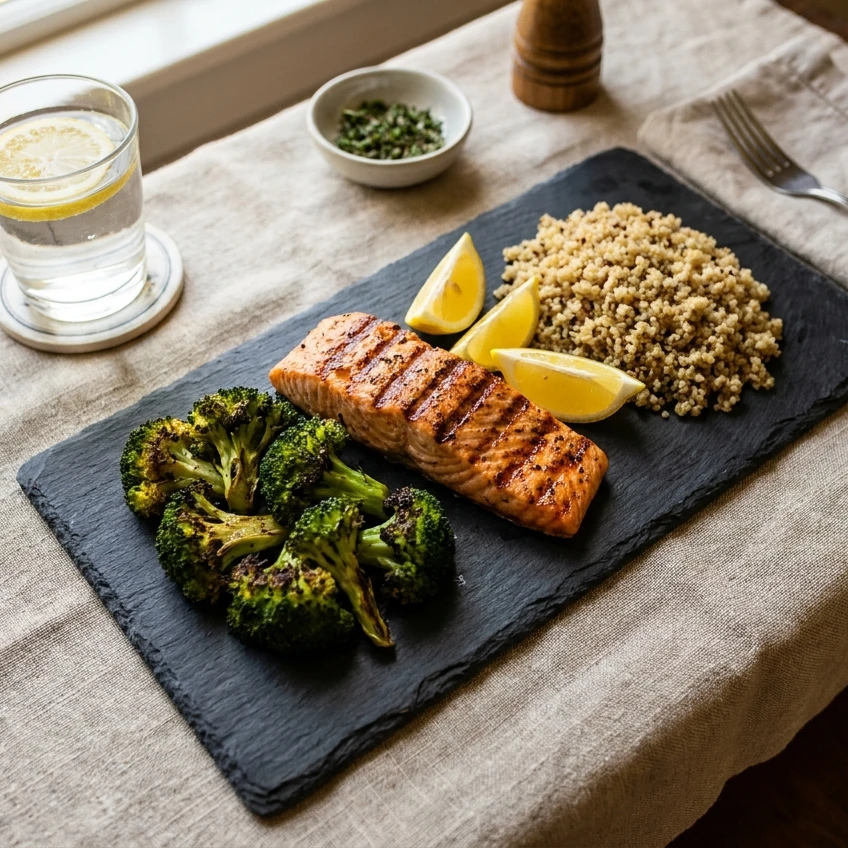
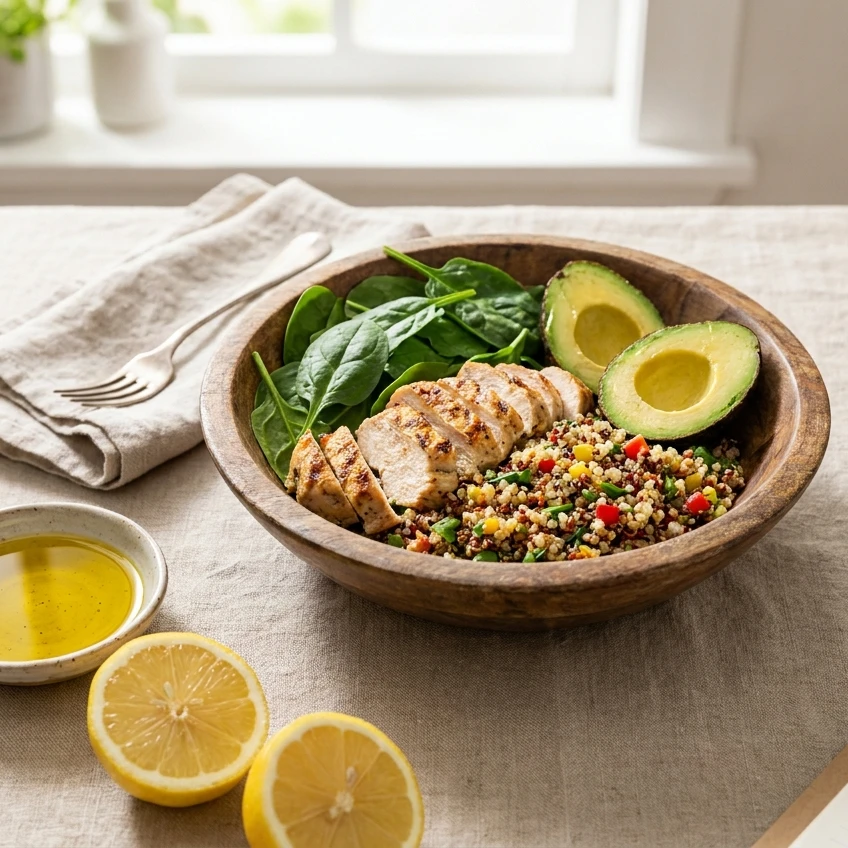
Protein at every meal. Higher protein intake reliably reduces hunger and increases fullness across short and longer-term studies. The practical target most appetite research converges on is 1.2–1.6 g of protein per kilogram of bodyweight per day, with around 25–30 g per meal — enough to meaningfully shift appetite hormones. For a 70 kg adult that's roughly 90–110 g daily. Easy meals that hit it: a Greek yogurt parfait with chia seeds, a quinoa edamame power bowl, or a grilled lemon garlic salmon with quinoa and broccoli — each lands around 25–35 g protein with fibre and a sensible calorie count.
Soluble fibre and high-volume vegetables. Fibre slows gastric emptying and adds bulk for very few calories. The NHS recommends 30 g of fibre per day, and the average adult gets only about 20 g — so most people have a 10 g/day gap to close. Lentils, beans, oats, chickpeas, berries and leafy greens do most of the heavy lifting. A bowl of hearty chickpea quinoa stew or a spinach and red lentil curry easily clears 12–15 g fibre in one meal. The trick isn't a fibre supplement — it's adding one fibre-dense meal a day until 30 g feels normal.
Water before meals. A 2015 randomised trial in primary-care patients with obesity found that drinking 500 ml of water 30 minutes before each main meal produced about 1.3 kg more weight loss over 12 weeks compared with usual advice. Acute studies in older adults show roughly a 13% reduction in calories eaten at the next meal after a 500 ml preload. The effect is most reliable in adults over 50; younger adults still benefit but a bit less. It's free, has no downsides, and treats the case where you mistake thirst for hunger.
Lower energy density, higher meal volume. A 450-kcal bowl of vegetable lentil soup fills more stomach than 450 kcal of crackers. That's the whole game on energy density — same calories, more food. Soups, stews, salads with protein, big stir-fries with whole grains all work this lever. It isn't about cutting anything; it's about making the plate visibly bigger for the same calorie count.
If you'd rather skip the calorie maths and just see what a personalised plan that hits these protein, fibre and energy-density numbers looks like for your routine, take the free 60-second NutriGuide quiz. No app download, no credit card.
The behaviour habits that quiet hunger almost as much as food does
Two of the strongest "natural appetite suppressants" aren't on a plate at all.
Sleep — usually the first thing to fix. Multiple controlled studies show that one to two nights of short sleep raise ghrelin (the hunger hormone) by 20–28% and lower leptin (the satiety hormone) by around 18%, with self-reported hunger up about 24%. In free-living follow-ups, people eat several hundred extra calories the next day, mostly from carbohydrate-heavy snacks. If your appetite has felt out of control lately, the first lever to pull is usually 7–8 hours of sleep — before any food rule, supplement or willpower exercise.
Slowing your eating pace. A systematic review and meta-analysis of 21 studies found that people who eat slowly have consistently lower BMIs than fast eaters. Short controlled studies show slow eaters report greater fullness and consume fewer calories from snacks afterwards. Mechanistically, your gut takes about 15–20 minutes to send the "I'm full" signal — eating fast bypasses it. Practical tactics that work without making meals weird: chew until each bite has no texture before swallowing, put the fork down between bites, and stop scrolling at the table.
Mind the appetite triggers that aren't hunger. Stress, boredom, dehydration and "it's there" eating around the kitchen all feel like hunger but aren't. A two-minute pause and a glass of water resolves a surprising share of them. Naming what you're actually feeling — tired, anxious, restless — is often enough to defuse the urge.
What about the "natural appetite suppressant" supplements?
Short version: most are weak, several are useless, a few have safety flags. We treat this category in detail in our 10 weight-loss supplement myths, debunked with real research piece — if you've seen claims about garcinia, raspberry ketones, green coffee bean or "fat-burner" blends, that's the article for you. The summary that's relevant here:
- Glucomannan (konjac fibre) has the most credible evidence, and even there it's underwhelming. A 2014 systematic review and meta-analysis of 8 RCTs found glucomannan produced no statistically significant weight loss versus placebo (mean difference -0.22 kg). A 2020 review found a small significant effect; a 2025 review showed bigger effects only at high doses (≥5 g/day for 12+ weeks). It's not nothing. It's also nothing like the marketing.
- Garcinia cambogia, raspberry ketones, green coffee bean, hoodia — weak, null or mixed evidence. None has the clinical backing the marketing implies.
- Caffeine and green tea catechins have small, real effects on appetite and energy expenditure — but the size is modest and most of the gain is already covered by ordinary coffee. You don't need an extract pill.
- Apple cider vinegar has a few small studies suggesting blunted glucose response after high-carb meals; the appetite effect is small and quickly outweighed by what's on the plate.
- Avoid entirely: anything containing ephedra, bitter orange (synephrine) at stimulant doses, or DNP. These have caused deaths. "Natural" is not a safety label.
If you want the maximum return on the smallest amount of effort: get the protein up, drink water before meals, sleep 7+ hours, and slow down. That stack will out-perform any supplement on the market for almost everyone.
Putting it together — a normal day that quiets hunger
This isn't a meal plan, it's a sketch of what the levers look like in practice for a 70 kg adult on roughly 1,800 kcal:
- Breakfast (around 30 g protein, 8 g fibre): Banana oatmeal protein pancakes with Greek yogurt, or a chia seeds Greek yogurt parfait. 500 ml of water before you eat.
- Lunch (around 30 g protein, 10 g fibre): A chickpea and sweet potato power bowl, quinoa edamame power bowl, or last night's lentil stew. Sit down. Don't scroll. Eat slowly.
- Snack: A piece of fruit, a small handful of nuts, or a glass of water if it's been four hours since lunch and you're not actually hungry.
- Dinner (around 30 g protein, 10 g fibre): A grilled lemon garlic salmon with quinoa and broccoli or hearty chickpea quinoa stew. 500 ml of water before. Stop eating before you feel stuffed; revisit in 20 minutes if you're still genuinely hungry.
- Sleep: lights down 30 minutes earlier than yesterday. Boring. Effective.
Three meals, around 90 g protein, around 28 g fibre, roughly 1.5 L of water taken before meals. No supplement. No "appetite suppressant." Just the levers the evidence actually backs.
Want this calibrated to your weight, calorie target and the foods you actually like — without picking a "fat-burner" or "appetite suppressant" first? Start the free NutriGuide quiz. 60 seconds, no app download, no credit card. You'll get a meal plan that hits the protein and fibre targets, a clear calorie number to aim at, and a short note on whether any supplement is worth your money for your specific case.
This article is general information, not medical advice. Speak to your GP or a registered dietitian before making significant dietary changes — especially if you are pregnant, breastfeeding, taking regular medication, managing a thyroid condition or diabetes, or have a history of disordered eating. Appetite-suppression content can be triggering: if you've ever struggled with restriction, binge-eating, anorexia or bulimia, please skip the "eat less, suppress hunger" framing entirely and seek support — Beat in the UK (0808 801 0677), the NEDA helpline in the US (1-800-931-2237), or Butterfly in Australia (1800 33 4673).