Do You Really Need Supplements on a Vegan Diet for Weight Loss?
An honest, evidence-led look at which supplements vegans actually need — and why none of them will make you lose weight faster.


Most vegans don't need a cabinet of supplements to lose weight. They need one — vitamin B12 — and possibly a small handful more for general nutritional adequacy: vitamin D in autumn and winter, omega-3 (EPA/DHA via algae oil), iodine, and sometimes iron, zinc or selenium depending on bloodwork. None of these supplements is a weight-loss aid. Weight loss on a vegan diet works the same way it works on any diet: a sustainable calorie deficit, enough protein to preserve muscle, and a meal pattern you can keep doing. The supplements keep your nutrition honest. The weight loss comes from the food.
This article separates the two questions cleanly — what vegans should take for adequacy, and what actually drives weight loss on a plant-based plan — because conflating them sells a lot of pills and helps very few people.
What the evidence says about vegan diets and weight loss
A vegan diet, on average, helps with weight loss. A 2016 meta-analysis of 12 randomised controlled trials found participants assigned to vegetarian diets lost about 2 kg more than non-vegetarian comparators over a median 18 weeks — and the vegan subgroup did slightly better, at -2.52 kg. With explicit energy restriction the gap widened to -2.21 kg. That's a real effect, and it's the diet doing the work — not any supplement layered on top.
The mechanism is unsexy: plant-forward meals tend to be higher in fibre and water, lower in calorie density, and more satiating per calorie. A bowl of lentil and vegetable stew at 450 kcal fills more stomach than 450 kcal of cheese pizza. That's most of the trick.
What this evidence does not say is that any supplement enhances the effect. No randomised trial in vegans has shown that adding B12, omega-3, plant-protein powder, MCT oil, "fat-burner" formulas, apple cider vinegar capsules, green tea extract or any "vegan weight-loss complex" produces meaningful additional fat loss. If a product is marketed as a vegan weight-loss accelerator, that's a marketing claim, not a clinical one.
For a head-to-head on how vegan stacks up against keto and intermittent fasting for weight management specifically, our companion article Keto, Fasting and Vegan: Which Works Best for Weight Management covers the comparison.
If you'd rather skip the comparison and just see what a personalised plant-forward plan looks like for your goals and routine — calories, protein target, recipe ideas, all sorted — take the free 60-second NutriGuide quiz. No app download, no credit card.
The supplements vegans should actually consider — and why
This is the adequacy list, not the weight-loss list. None of these makes you lose weight faster. Several of them keep you well enough to stay consistent with the diet — which is what produces results.
Vitamin B12 — essential, no debate. The NIH Office of Dietary Supplements is unambiguous: "natural food sources of vitamin B12 are limited to animal foods", and vegans face elevated deficiency risk without fortified foods or a supplement. Long-term B12 deficiency causes fatigue, low mood, neurological damage and megaloblastic anaemia. The Vegan Society recommends cyanocobalamin as the most stable, well-researched form. If you're on metformin (for prediabetes or PCOS), the NIH specifically flags reduced B12 absorption — get your levels checked. Pregnant and breastfeeding vegans should discuss B12 with their GP rather than self-prescribing.
Vitamin D — most adults, especially in winter. The NHS recommends that everyone consider a daily vitamin D supplement during autumn and winter, because food alone rarely supplies enough. Vegan-friendly D3 (sourced from lichen) is widely available. Vitamin D doesn't speed up fat loss; it does support immune function, bone health and mood — all of which matter when you're trying to maintain a deficit through a UK winter.
Omega-3 (EPA/DHA via algae oil) — reasonable for most vegans. Plant sources of omega-3 (flax, chia, walnuts) provide ALA, which converts to EPA and DHA inefficiently. The NHS notes that plant-source omega-3 "may not have the same benefits in reducing the risk of heart disease as those in oily fish." An algae-derived EPA/DHA supplement closes the gap. Effects on body composition in trials are small. Use it for cardiovascular and cognitive support, not for weight loss.
Iodine — easy to miss, easy to over-supplement. The NHS lists iodine among nutrients "more difficult to get through a vegan diet." Without dairy and fish, intake often falls short. Fortified plant milks and a low-dose iodine supplement (around 150 mcg/day for adults) cover most people. More is not better — excess iodine can disrupt thyroid function in either direction.
Calcium — usually possible from food, supplement if not. The NHS lists fortified plant milks, calcium-set tofu, kale, broccoli, sesame seeds and bread as reliable sources. If you don't routinely consume any of those, a calcium supplement is reasonable. Choose calcium citrate over calcium carbonate for absorption.
Iron, zinc, selenium — check, don't guess. Plant iron (non-haem) is less bioavailable than animal iron, but vegans aren't reliably more iron-deficient in well-conducted population studies. Menstruating women are the higher-risk group regardless of diet. Get a ferritin test before supplementing iron — too much is harmful. Zinc and selenium are similar: a varied diet of legumes, nuts, seeds and whole grains usually covers it; supplement only if a blood test flags a gap.
The pattern: B12 always, vitamin D usually, omega-3 reasonably, iodine often, the rest based on bloods. Nothing on this list moves the scale.
What actually moves weight on a vegan diet
Three things, in order:
A calorie deficit you can sustain. Plant-forward eating makes this easier — fibre and water do most of the satiety work — but it doesn't bypass the maths. A modest 300–500 kcal/day deficit produces roughly 0.3–0.5 kg of fat loss per week without the side effects of aggressive cuts. If you've gone vegan, kept eating to appetite, and the scale isn't moving, the problem is almost always portion sizes on calorie-dense plant foods (nut butters, oils, vegan cheeses, smoothie bowls, processed vegan junk) — not a missing supplement.
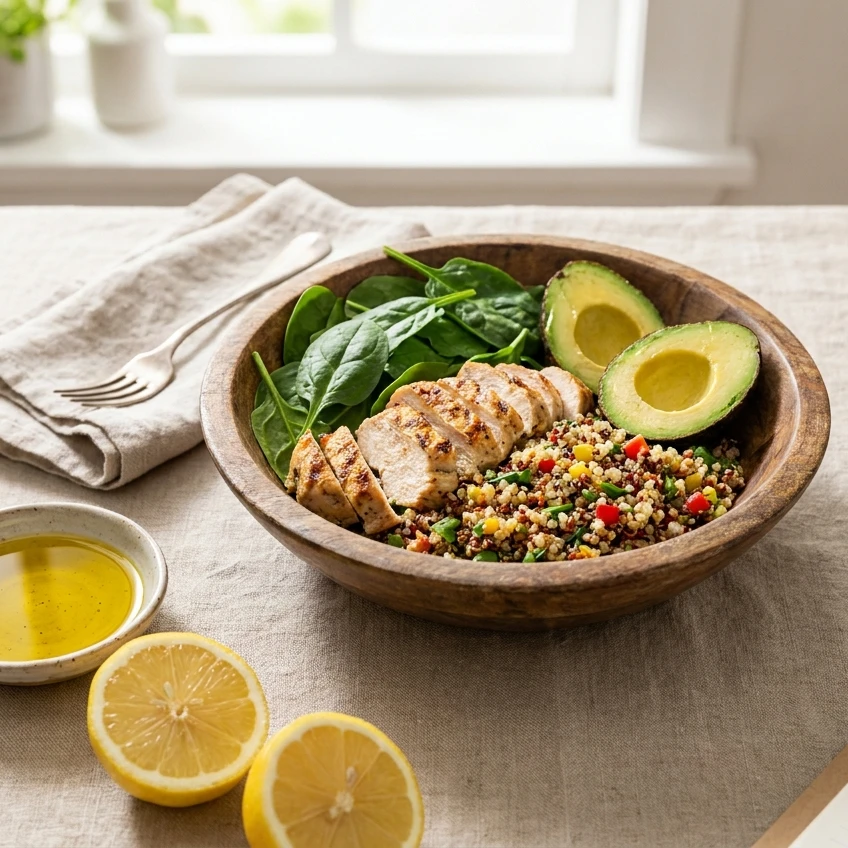
Enough protein. The single most-overlooked lever in vegan weight loss. The practical target most studies converge on is 1.2–1.6 g of protein per kg of bodyweight per day during a deficit, with around 25–30 g per meal — enough to blunt hunger and preserve muscle. For a 70 kg adult, that's roughly 90–110 g/day. Whole-food sources that hit it efficiently: lentils, chickpeas, edamame, tofu, tempeh, seitan, soy milk, nutritional yeast. Plant-protein powder is a convenience tool, not a fat-burner. Practical plates: a spicy chickpea stew with quinoa, a Mediterranean lentil and quinoa power bowl, or a spinach and red lentil curry with rice all land in the 20–30 g protein, 10+ g fibre range.
A pattern you'll keep doing. Vegan diets perform well in trials partly because participants eat more whole foods by default. Once your "vegan" plan is mostly meat-substitute burgers and oat-milk lattes, the calorie-density advantage is gone. Plan three reliable lunches and dinners you actually like — a hearty vegetable and lentil soup or Moroccan lentil and vegetable stew are batch-friendly meals that quietly carry a deficit. Boring beats clever.
When to involve a clinician
See your GP or a registered dietitian — don't self-supplement — if any of the following apply:
- You're pregnant, breastfeeding, or planning pregnancy on a vegan diet (B12, iron, iodine, omega-3 needs all shift).
- You're taking metformin or other medication that may affect B12 absorption.
- You're a menstruating woman and feel persistently fatigued (rule out iron-deficiency anaemia with bloods, don't guess).
- You have a thyroid condition or family history (iodine self-supplementation can backfire).
- You have a history of disordered eating around restriction (a "supplements stack" can drift into rule-based behaviour fast).
- Weight loss has stalled for 8+ weeks despite a tracked deficit, decent sleep, and a sensible protein target.
Supplements bought from Instagram won't fix a B12 of 150 pmol/L or a ferritin of 12 µg/L. Bloods are cheap; guesswork isn't.
The honest summary
A vegan diet, eaten well, is a credible tool for weight management — the meta-analysis evidence puts the average advantage at around 2–2.5 kg over comparators. The supplements that matter on a vegan diet matter for nutritional adequacy: B12 above all, vitamin D in winter, omega-3 from algae, iodine, and the rest based on a blood test. Not one of them is a weight-loss drug, and no responsible source claims otherwise. The work is done by the calorie deficit, the protein, and the meal pattern you can repeat without resentment.
Want a plant-forward plan calibrated to your calorie target, protein needs and the foods you actually enjoy — without picking a "vegan weight-loss stack" first? Start the free NutriGuide quiz. 60 seconds, no app download, no credit card. You'll get a meal plan that quietly hits the protein target and the deficit — and a clear, no-fluff note on which supplements (if any) are worth your money.
This article is general information, not medical advice. Speak to your GP, a registered dietitian or a qualified plant-based nutrition specialist before starting supplements or making significant dietary changes — especially if you are pregnant, breastfeeding, taking regular medication (including metformin), managing a thyroid condition or anaemia, or have a history of disordered eating.