10 Weight Loss Supplement Myths, Debunked With Real Research
Most weight loss supplements have weak or no evidence — and a few cause real harm. The honest research on 10 common myths.


Every bottle in the supplement aisle promises something — fat burning, appetite suppression, metabolism boosting. Most of those promises don't survive contact with real research. The U.S. National Institutes of Health has reviewed the most-marketed weight loss ingredients and found most produce no meaningful effect, and several have been linked to documented cases of acute liver injury and liver transplants. Below are ten of the most common myths, debunked with current research — plus what actually moves the needle for sustainable weight loss.
Myth 1: Weight loss supplements are FDA-approved before they reach shelves
They aren't. Under the Dietary Supplement Health and Education Act of 1994 (DSHEA), the FDA does not approve dietary supplements for safety or effectiveness before they're sold. As the agency puts it on its consumer information page on dietary supplements, "FDA is not authorized to review dietary supplement products for safety and effectiveness before they are marketed."
A brand can launch a new fat-burner on Monday and the FDA may never have heard of it. The agency only steps in after harm is reported. "FDA-registered facility" on a label means the building exists in a database — not that the product has been approved.
Myth 2: All weight loss supplements work the same way
They don't, and that matters because the strongest claim a brand can make is usually for the ingredient with the weakest evidence.
The NIH Office of Dietary Supplements groups common ingredients by mechanism — appetite suppressants (glucomannan, hoodia), fat blockers (chitosan), fat oxidisers (caffeine, green tea extract), "metabolism boosters" (bitter orange, raspberry ketones). Of these, only caffeine and glucomannan have moderately consistent human trial data. Hoodia, raspberry ketones, and bitter orange have either no human evidence or evidence so thin the NIH explicitly flags it (NIH ODS: Dietary Supplements for Weight Loss).
Different mechanisms, mostly disappointing evidence — sold off the same shelf with the same vague promises.
Myth 3: Supplements can melt fat away while you sleep
Fat doesn't get "burned off" by a capsule. Fat loss happens when energy intake is below energy expenditure, sustained over time. No pill repeals that.
Even the supplement ingredients with the strongest effects produce small ones — and the strongest stimulant blends are no longer legal. The AHRQ evidence report on ephedra (banned from US dietary supplements since 2004) found that ephedrine plus caffeine produced "approximately 2 pounds per month greater" weight loss than placebo, for up to four to six months — at the cost of psychiatric, autonomic, and cardiovascular side effects (AHRQ Evidence Report on Ephedra and Ephedrine). That was the high-water mark for "what a supplement can do," and it was banned for harm.
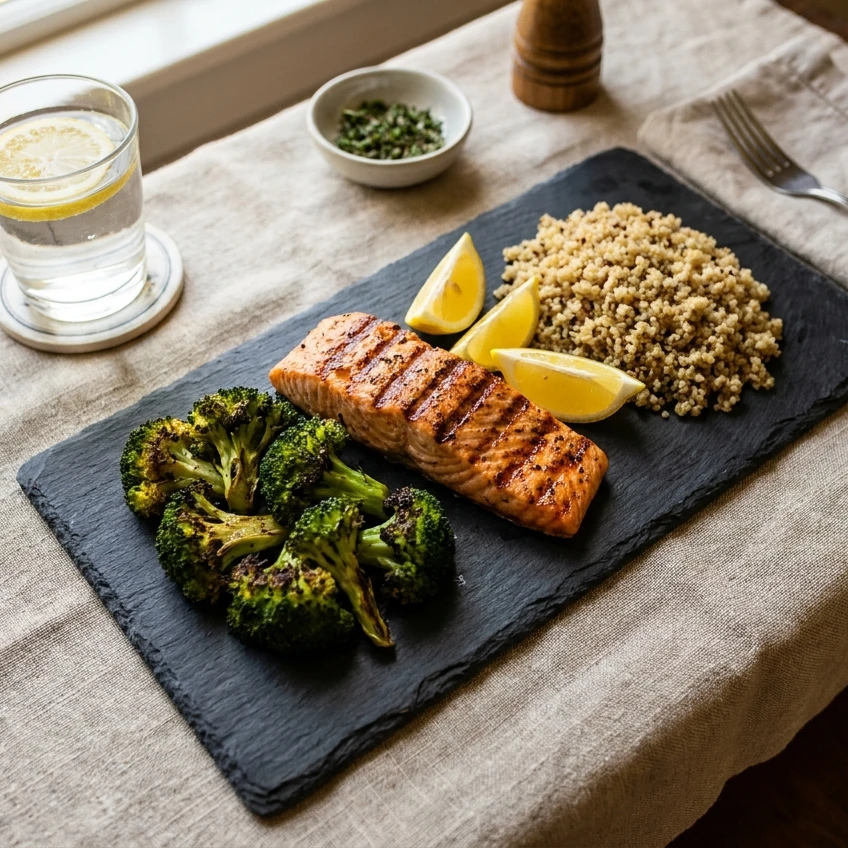
If you want to lower the calorie ceiling without a pill, build meals around lean protein and fibre — they keep you full longer for the same calories. A breakfast like chia seeds and Greek yogurt parfait or banana oatmeal protein pancakes does more for satiety than any thermogenic capsule.
Myth 4: "Natural" means safe
It doesn't. Two of the best-documented cases of supplement-induced liver injury both involve "natural" plant extracts.
Garcinia cambogia — the rind extract behind countless "fat-blocker" products — has been linked to acute liver failure in multiple published case reports, including cases requiring liver transplantation. The NIH's LiverTox database concludes garcinia "has been associated with rare instances of clinically apparent acute liver injury" with onset typically 1–4 weeks after starting the product (LiverTox: Garcinia Cambogia, NIH/NIDDK).
Green tea extract has its own track record. The NIH's LiverTox database classifies green tea extract with a Likelihood Score of A — meaning it is a "well-established cause of clinically apparent liver injury," with cases ranging from mild aminotransferase elevations to acute liver failure requiring transplantation or causing death (LiverTox: Green Tea, NIH/NIDDK). The catechin EGCG is the suspected agent. Worth noting: drinking green tea (the beverage) has not been linked to liver injury — the issue is the concentrated extract sold in capsules.
Both ingredients are botanically natural. Neither is automatically safe.
Want a personalised plan that doesn't rely on supplements at all? Take the free 60-second NutriGuide quiz and get a meal plan built around your goals, schedule, and food preferences — no pills, no fads, no "miracle" claims.
Myth 5: Expensive supplements work better than cheap ones
Price tells you about packaging, marketing, and margins — not efficacy. Two products with the same dose of the same molecule perform identically, regardless of which one came in the glossier bottle.
What meaningfully separates products is third-party testing. USP Verified, NSF Certified, and ConsumerLab confirm the bottle contains what the label says, at the stated dose, without contaminants. Without that, independent testing repeatedly finds supplements under-dosed, over-dosed, or contaminated — including, in some weight-loss products, banned pharmaceuticals. The third-party seal does more for you than any price tier.
Myth 6: Raspberry ketones (and most "miracle" ingredients) are backed by science
They aren't. Raspberry ketones became a household name after a 2012 daytime-TV segment, and the brand has stuck. The research base is thin to invisible: no human clinical trials have evaluated raspberry ketones alone for weight loss. Every published human study used multi-ingredient blends, making it impossible to know what (if anything) the ketones contribute (Raspberry Ketone — Update 2020, Diseases).
The pattern repeats — bitter orange, African mango, hoodia, forskolin, white kidney bean extract. Most have either no human trials or trials so small they tell you almost nothing. The marketing is decades ahead of the evidence.
Myth 7: The supplement does the work — diet and exercise are optional
Even ingredients with the best evidence (caffeine, glucomannan, protein supplements) only work on top of a calorie deficit. The pill can shave a small amount off the edges; it can't replace the foundation.
The NHS frames safe, sustainable weight loss as roughly 0.5–1kg per week, achieved by reducing daily intake by around 600 kcal below maintenance (NHS: Treatment for obesity). Every randomised trial that shows a supplement "works" embeds that deficit as the actual mechanism. Take the supplement away, keep the deficit — most of the weight loss still happens. Take the deficit away, keep the supplement — almost none of it does.
Myth 8: Doubling the dose speeds up results
Higher doses don't accelerate weight loss; they accelerate side effects. Above roughly 400 mg of caffeine per day, the European Food Safety Authority warns of cardiovascular and sleep effects without further benefit — and sleep disruption tends to increase hunger the next day, so a high-dose stimulant can quietly move you backwards. More isn't faster. It's just riskier.
Myth 9: One supplement is enough
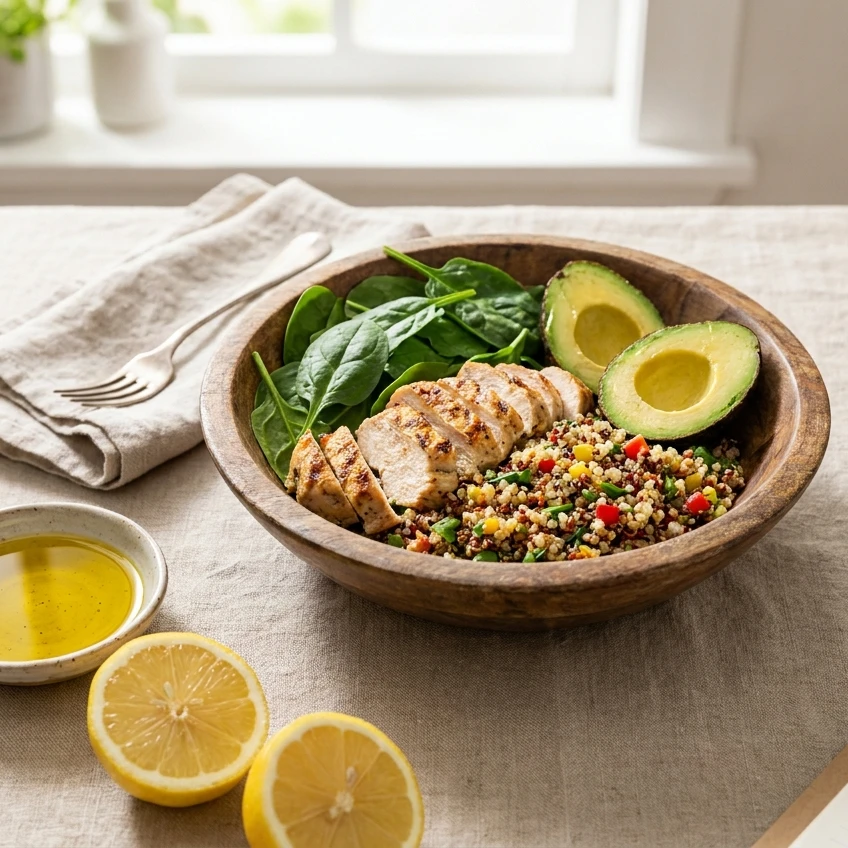
A single supplement targeting a single mechanism — say, an appetite suppressant — at best addresses one slice of why people struggle to lose weight. It does nothing about protein intake, sleep, training, stress, or the food environment. A pill can't fix a snack drawer at 9pm, can't make tomorrow's lunch easier, can't change the takeaway you order on Friday because you're tired. Those changes are won at the meal level. Recipes like grilled lemon-herb chicken or spinach and feta stuffed chicken breast do more in a week of dinners than any single capsule.
Myth 10: Supplements give you long-term weight loss
Almost no supplement has been studied long enough to know its long-term effect. Most weight-loss trials run 8–12 weeks; a handful run six months; almost none run a year, and fewer still track what happens after participants stop.
What the long-term obesity literature consistently shows is the opposite — the predictor of keeping weight off is a sustained change in eating patterns and activity, not a product. The supplement category, by structure, is built for the short term. Sustainable loss is a long game.
What actually works
Strip the supplement industry's claims down to what's left after the evidence has its say, and you get a short, unsexy list:
- A small, sustained calorie deficit — around 300–600 kcal/day for most adults
- Adequate protein, roughly 1.2–1.6g per kg of bodyweight, to preserve lean mass and stay full
- Fibre and whole foods, because they're more satiating per calorie
- A routine you can keep doing in twelve months, not just twelve weeks
For the food side, our beginner's guide to balancing macros for weight management covers protein, fibre, and calorie targets in plain English. If appetite is the bit you're struggling with most, the best natural appetite suppressants and how to use them effectively covers food-based strategies with evidence behind them.
Take the free NutriGuide quiz — 60 seconds, no app download, no credit card. You'll get a personalised meal plan tailored to your goals, schedule, and food preferences, with recipes you'll actually want to cook. No supplement push. No fat-burner upsell. Just the food side, done properly.
This is general information, not medical advice. Talk to your GP, registered dietitian, or pharmacist before starting any supplement, especially if you take medication, are pregnant or breastfeeding, or are managing a chronic condition. If you experience symptoms like fatigue, nausea, abdominal pain, or yellowing of the skin or eyes after starting a supplement, stop taking it and seek medical attention — these can be early signs of liver injury.