PCOS Meal Plan for Weight Loss — What Actually Works
Low-GI, protein-led PCOS meal plan with a sample week, NHS and 2023 guideline-backed targets, and what to skip.
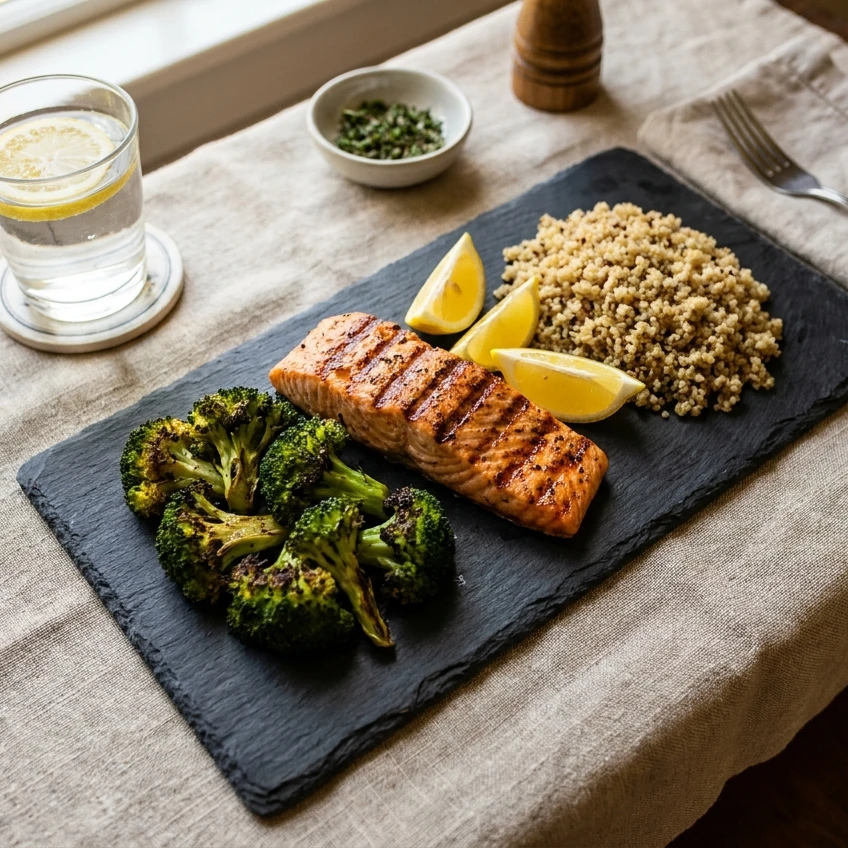
PCOS Meal Plan for Weight Loss — What Actually Works
The shortest honest answer: a PCOS-friendly meal plan for weight loss is low glycaemic index, protein-led, and modestly calorie-reduced — not low-carb or low-fat by default, and not a 1,200-calorie crash. The 2023 international evidence-based guideline for PCOS, led by Monash University and published in The Journal of Clinical Endocrinology & Metabolism, frames lifestyle as the first-line intervention for every woman with PCOS, and recommends roughly 5–10% body weight reduction (when above a healthy weight) to improve insulin sensitivity, cycle regularity, and ovulation. You don't need to fix everything; you need a steady eating pattern that doesn't spike your blood sugar and doesn't leave you starving by 11am.
The reason generic diet advice keeps failing women with PCOS is hormonal. Up to 70% of women with PCOS have insulin resistance, which means standard "eat less, move more" plans built for non-resistant metabolisms produce slower scale movement and faster hunger. The fix isn't more discipline. It's a different plate structure.
The NHS guidance on PCOS puts it plainly: if you're carrying excess weight, losing some of it makes the symptoms — irregular periods, acne, excess hair, fertility problems — measurably better. The catch is that "lose weight" is the easy half of the sentence to write and the hard half to act on, especially when the metabolism is fighting you.
What makes a meal plan PCOS-friendly
Three levers do most of the work. None of them require eliminating food groups.
Glycaemic load, not just carbs. A 2010 randomised controlled trial in the American Journal of Clinical Nutrition by Marsh and colleagues compared a low-GI diet to a conventional healthy diet in women with PCOS and found the low-GI group had significantly better insulin sensitivity and a 95% rate of improved menstrual regularity, versus 63% on the standard plan. Practical translation: swap white rice for quinoa, cornflakes for steel-cut oats, and rice cakes for an apple with peanut butter. The total carb count barely changes — the speed at which it hits your bloodstream does.
Protein at every meal. Aim for 25–35g of protein per meal, three meals a day. That's roughly a palm-sized chicken breast, a tin of tuna, two whole eggs plus 100g of Greek yoghurt, or 150g of cottage cheese. Protein blunts the post-meal insulin response and is the single most reliable lever against the "I ate two hours ago and I'm starving" pattern that derails most PCOS plans.
Anti-inflammatory fats, not low fat. Olive oil, avocado, oily fish, nuts. PCOS is a low-grade inflammatory state, and a Mediterranean-pattern fat profile lowers C-reactive protein and supports insulin signalling. Low-fat dairy is fine; fat-free everything is unnecessary and usually ramps up the carb load to compensate.
Build your PCOS-friendly meal plan in 2 minutes. Take the free NutriGuide quiz → The plan adapts to your weight, activity level, and food preferences, and skips the foods that spike your blood sugar fastest.
A sample low-GI day that takes the guesswork out
This is one day from a 1,600-calorie template — a typical starting point for a 35-year-old woman around 75 kg with light activity. Adjust up or down based on your goals; the structure matters more than the exact numbers.
- Breakfast (around 30g protein): Veg-loaded eggs with avocado on rye. A vegetable omelette is the base — add 100g of cottage cheese on the side and a slice of seeded rye to hit the protein target.
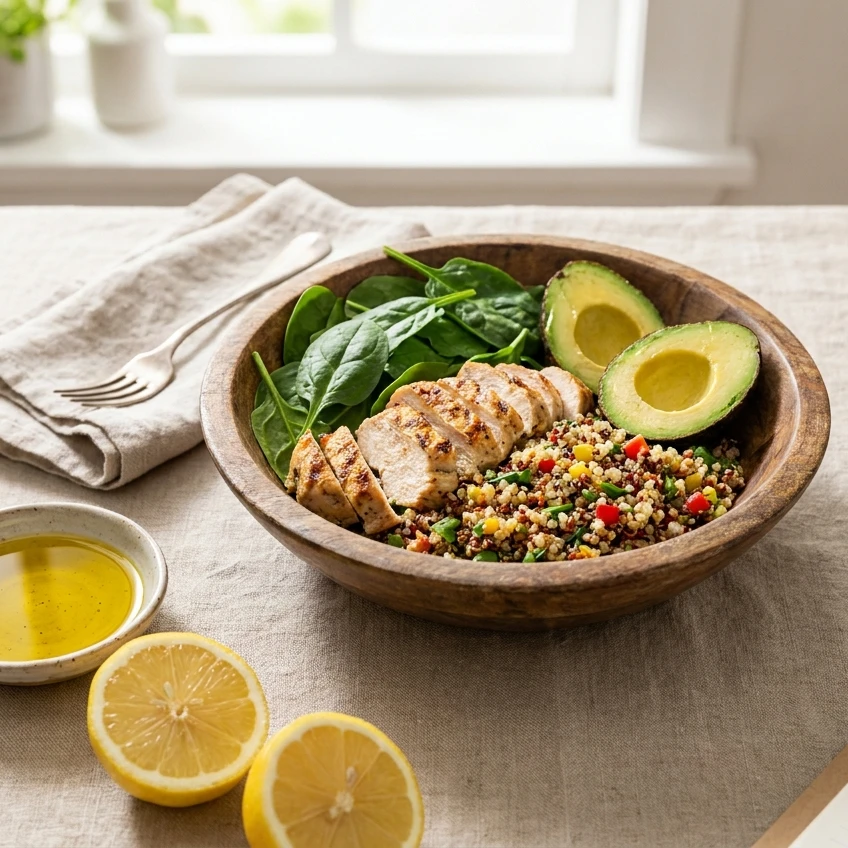
- Lunch (around 35g protein): A grain-and-protein bowl. The Mediterranean grilled chicken and quinoa salad is a useful default; quinoa has a glycaemic index around 53, well below the 70+ of white rice or instant oats, and the chicken puts you at 30g of protein from the recipe alone.
- Snack: A berry almond yogurt parfait — 21g protein, low GI, and the almond fat slows the berry sugars further.
- Dinner (around 30g protein): Mediterranean stuffed chicken with almond flour and spinach is a low-carb template that hits 43g of protein, with two fists of non-starchy vegetables and a cupped hand of lentils or sweet potato on the side. Olive oil and lemon, not flour-thickened sauces.
That's roughly 110–120g of protein, a calorie deficit of around 300–400 kcal for the example profile, and a glycaemic load that won't send your insulin on a rollercoaster. Repeat the structure five days a week and you have a plan that runs on autopilot.
What doesn't work (and is wasting your time)
Crash deficits below 1,200 kcal. They tank your thyroid output, increase cortisol, and rebound. The 2023 guideline specifically calls for sustainable energy deficits, not aggressive ones.
"Detox teas" and supplement stacks marketed for PCOS. Inositol has reasonable evidence, especially myo-inositol at 2g twice daily, but most PCOS-branded supplements are repackaged general fat burners. We've covered the evidence base for what's worth taking in how hormones affect weight loss and what supplements actually help — read it before you spend money.
Cutting carbs to zero. Severe low-carb intake can worsen sleep, mood, and thyroid markers in some women, and isn't required to manage insulin. Aim for 100–150g of carbs from low-GI sources, not 30g.
Treating PCOS like generic obesity. Insulin resistance is the engine. If you haven't been screened, it's worth a conversation with your GP — and you can check your insulin resistance risk in two minutes to see whether to push for the test.
The movement piece — small, but it stacks
Diet does most of the body composition work, but the 2023 international PCOS guideline recommends 150–300 minutes of moderate-intensity activity or 75–150 minutes of vigorous activity per week, plus muscle-strengthening twice weekly. Twice-a-week resistance training matters disproportionately for insulin-resistant women — muscle is the largest glucose sink in the body. Two 30-minute sessions with dumbbells or a kettlebell beat five hours of cardio for PCOS-specific outcomes.
If you're new to lifting, start with goblet squats, hip hinges, rows, and presses. Three sets of eight, two days a week. That's it.
A note for women in Australia, where the international guideline was led: the Monash Centre PCOS resources include patient-facing materials your GP can refer you to, and the same lifestyle recommendations are echoed by the NHS and most national bodies. The plate structure doesn't change between markets — only the food labelling does.
Common mistakes that stall PCOS weight loss
Three patterns come up repeatedly in clinic notes and PCOS forums:
- All-or-nothing eating. A "perfect" day of 1,100 kcal followed by an evening graze that erases the deficit. The fix is a wider, more flexible target — say 1,500–1,700 kcal — that you actually hit five days a week instead of four catastrophic ones.
- Skipping breakfast then over-correcting at dinner. PCOS metabolisms tend to do better with front-loaded calories. A 30g-protein breakfast within an hour of waking flattens the rest of the day; a coffee-only morning sets up an evening blood sugar rollercoaster.
- Treating the scale as the only signal. Body composition often shifts before scale weight does — especially if you've started resistance training. Take waist measurements monthly, photos in the same lighting, and track cycle length. These are the metrics that move first.
How this fits with the rest of your nutrition
PCOS sits in a wider hormonal picture, especially if you're past 35. Insulin, cortisol, oestrogen, and thyroid all interact, and the meal pattern that works for PCOS overlaps heavily with the pattern that works for reversing insulin resistance naturally and with the broader meal plan for women over 40. If two of those three apply to you, the same plate structure handles them all — you don't need three separate diets.
Ready to stop guessing? Build your personalised PCOS-friendly meal plan in 2 minutes → The quiz factors in insulin resistance risk, food preferences, and your actual schedule — so the plan survives a real week, not a Pinterest version of one.
PCOS is a medical condition. This article is general information, not medical advice — work with your GP, gynaecologist, or a registered dietitian to tailor a plan to your bloodwork and symptoms. Reviewed by [Reviewer Name, RD] — placeholder, replace before publish.